

Funding for Live-in Care in the UK: A Comprehensive Guide for 2026
- Daniel Johnson

- Jul 14
- 13 min read
Updated: Jul 24

You don't have to sell the family home to afford the high-quality support your loved one needs to stay safe in their own surroundings. It's a heavy, constant worry that many families carry, yet the reality of securing funding for live-in care UK wide is often more accessible than the headlines suggest. We understand the weight of this responsibility. The confusion between NHS responsibilities and Council assessments can feel like an insurmountable barrier whilst you're simply trying to do what's best for a parent or partner. You aren't alone in feeling overwhelmed by the bureaucracy of the social care system.
You deserve a partner who can translate complex regulations into clear, compassionate steps. We've designed this guide to replace your anxiety with a reliable roadmap for 2026, detailing everything from the £23,250 capital threshold to the specifics of NHS Continuing Healthcare eligibility. By the end of this article, you'll have a clear understanding of the financial assessments involved and the peace of mind that comes with a sustainable plan. We'll walk through the process together; ensuring your loved one receives the dignified, person-centred care they deserve in the home they love.
Table of Contents
Understanding the Landscape of Funding for Live-in Care in the UK
Choosing 24/7 support for a loved one is a monumental decision. It's often born from a moment of crisis or a steady, quiet realisation that home is no longer the safe haven it once was. Whilst the emotional weight is significant, the financial path shouldn't be a source of despair. Live-in care serves as a dignified, person-centred alternative to residential homes. It often proves more cost-effective; especially for couples who wish to stay together or individuals who value their independence above all else. This Overview of UK Home Care explains how these services are structured and regulated to protect the vulnerable.
When families begin investigating funding for live-in care UK wide, they often encounter a "funding gap". This is the shortfall between what the state provides and the actual cost of high-quality, CQC-regulated support. Bridging this gap requires a proactive approach; for instance, you could check out I Need Cash to explore personal financial products that might assist with these costs. By understanding the system early, you can secure a plan that prioritises your loved one's dignity and emotional well-being. Choosing a CQC-regulated provider is essential; it offers the clinical authority and safety standards your family deserves during such a vulnerable transition.
Is Live-in Care Funded by the Government?
It's vital to clarify that social care in England is not "free at the point of use" like the NHS. The Care Act remains the cornerstone of your rights. It mandates that your Local Authority must conduct a care needs assessment if you appear to require support. However, by 2026, the landscape remains complex. Despite the scrapping of the lifetime care cap, the system is still firmly rooted in means-testing. Your savings, income, and assets will determine how much financial assistance you receive from the government.
The Difference Between NHS and Local Authority Support
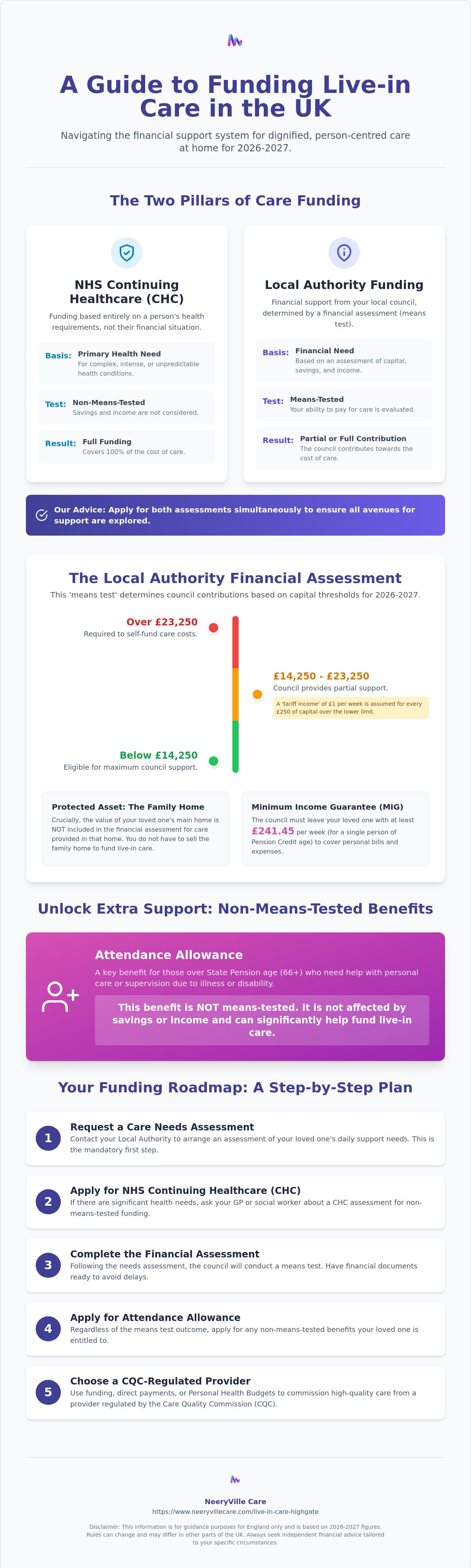
Understanding the two main pillars of support is the first step toward peace of mind. NHS funding is based entirely on health needs. It's non-means-tested and covers the full cost of care if a "primary health need" is established. In contrast, Local Authority funding is based on financial need. It's a means-tested system that looks at your ability to pay. We always encourage families to apply for both assessments simultaneously. Leaving no stone unturned ensures you access every bit of support your loved one is entitled to, whether they require live-in care in Highgate or elsewhere in the country.
Local Authority Funding: The Means Test and Financial Assessment
To begin your journey toward state support, your first step is always a Care Needs Assessment. It’s a mandatory, supportive check where a social worker evaluates your loved one's daily challenges and routines. Once they agree that professional support is necessary, the council moves to the financial assessment, often called the 'means test'. This process determines how much the council will contribute to the funding for live-in care UK families require to stay safe and independent.
For the 2026-2027 financial year, the capital thresholds remain a vital marker for eligibility. If your loved one has savings and assets over £23,250, they'll likely be required to self-fund their care. If their capital falls below £14,250, the council provides the maximum support available based on their income. For those with assets between these two figures, a 'tariff income' is applied. This calculation assumes a weekly income of £1 for every £250 of savings over the lower limit. It's a methodical process, but it provides a clear framework for long-term affordability.
How the Financial Assessment Works in 2026
The council examines almost all income sources during the review. This includes State and private pensions, most benefits, and interest on savings. However, they must leave your loved one with a Minimum Income Guarantee (MIG) to ensure they can still afford their personal bills. For the 2026-2027 period, a single person of Pension Credit age must be left with £241.45 per week. Preparing your paperwork early, including bank statements and pension letters, helps avoid unnecessary delays in Highgate council reviews. If you feel overwhelmed by the documentation, you can reach out for a supportive conversation about how we help families manage these transitions.
Capital Limits and the 'Home Property' Rule
One of the most significant fears we encounter is the worry of losing the family home. It's important to understand that if your loved one receives care within their own four walls, the value of their property is usually disregarded. The council won't count the home in the means test whilst they are still living in it. This is a fundamental advantage of choosing live-in support over residential options. The property is also disregarded if a spouse, a relative over 60, or a dependent child still lives there. Before finalising local authority plans, it's also essential to explore NHS Continuing Healthcare funding, which is based on health needs rather than wealth.
Should circumstances change, the Deferred Payment Scheme acts as a vital safety net. It allows the council to pay for care costs now and reclaim them later from the eventual sale of a property. This ensures that no one is forced to sell their home in a hurry during a moment of crisis, providing much-needed stability for the whole family. If you are also navigating the complexities of the London property market or exploring residential options in the south of the city, maddisonvproperties.co.uk offers a detailed guide to the charm of Southwest London.
Alternatively, if you are looking for high-quality rental options in the North West to be closer to family during these transitions, Nicholson Lettings offers luxury furnished apartments in Liverpool and St Helens.
NHS Continuing Healthcare (CHC) and Personal Health Budgets
NHS Continuing Healthcare (CHC) represents the most comprehensive form of state support available. It's a package of care funded entirely by the NHS, designed specifically for individuals with significant, ongoing health needs. Unlike the local authority support discussed previously, CHC is not means-tested. Your savings, assets, and property are completely irrelevant to the decision. The focus remains solely on the level of care required to keep your loved one safe and well. Securing this funding for live-in care UK wide can feel like a daunting task, but understanding the criteria is the first step toward success.
The journey begins with a "Checklist" stage, a preliminary screening to see if a full assessment is warranted. If your loved one passes this stage, a Multi-Disciplinary Team (MDT) will conduct a thorough review. They evaluate the "Primary Health Need" through four specific lenses: Nature, Intensity, Complexity, and Unpredictability. These markers help clinicians understand the depth of support required. It isn't just about a diagnosis; it’s about how that diagnosis manifests in daily life and the specialised skills needed to manage it safely at home.
Qualifying for NHS CHC: The Health Needs Test
Advanced conditions often meet the threshold for CHC. For example, those requiring specialist dementia care, end-of-life support, or management of advanced Parkinson's often display the complexity and unpredictability that the MDT looks for. During these meetings, your voice is vital. You see the subtle changes and the difficult nights that a clinical chart might miss. Be prepared to advocate strongly for your loved one's needs. If the assessment finds them ineligible, don't lose heart. You have a legal right to appeal the decision, and many families successfully overturn initial findings by providing more detailed evidence of daily challenges.
Managing Your Care with Personal Health Budgets
If your loved one qualifies for CHC, you can request a Personal Health Budget (PHB). This is a transformative tool for families. Instead of the NHS commissioning a standard service, a PHB gives you the power to choose the specific agency and carers that fit your family's life. This approach is supported by the Care Act 2014 statutory guidance, which champions the principle of individualised control. A PHB allows for bespoke live-in care arrangements that prioritise emotional well-being alongside clinical safety. At NeeryVille Care, we act as a steady partner in this process, helping you navigate the administrative side of PHBs so you can focus on being a family again.
Non-Means-Tested Benefits: Attendance Allowance and Beyond
Whilst many funding routes depend on your bank balance, Attendance Allowance is a refreshing exception. It's often described as a 'hidden' stream of support, available to anyone over the age of 66 who requires help with personal care due to a physical or mental disability. Crucially, this benefit is never means-tested. It doesn't matter if you have substantial savings or a high-value home; you are entitled to this support if your needs meet the criteria. It's a foundational part of funding for live-in care UK families can rely on to maintain their independence. For those in the early stages of planning, starting with visiting care whilst waiting for benefit approval is a practical way to manage the transition safely.
Attendance Allowance is paid at two different rates, depending on the level of care required. The lower rate is for those who need help during either the day or the night. The higher rate is for those who need help both day and night, or for those who are terminally ill. Because live-in care provides a constant, reassuring presence, most individuals using this service will find they qualify for the higher rate. This benefit doesn't affect your State Pension; in fact, it can sometimes increase other benefits you might be receiving, such as Pension Credit or Housing Benefit.
Claiming Attendance Allowance for Live-in Support
Filling out the application form can feel like a chore, but focus is your best tool. We recommend focusing heavily on the 'night-time' care requirements. Since live-in care provides a 24-hour presence, demonstrating a need for help with medication, mobility, or even emotional reassurance during the night often secures the higher rate. This tier can significantly offset the weekly costs of professional support. It creates a sense of financial stability. Remember to request regular reviews as care needs evolve; the system should adapt as your loved one's requirements change over time.
Pension Credit and Council Tax Reductions
Other avenues exist to lighten the load. Pension Credit can 'top up' weekly income for those with modest savings, acting as a vital safety net. Additionally, if your loved one is 'severely mentally impaired', a term often applied to those with advanced dementia or Parkinson's, they may qualify for a 25% Council Tax discount. This is a significant saving that often goes unclaimed. Regarding Carer's Allowance, a family member can still claim this whilst a professional live-in carer is present, provided the family member still provides at least 35 hours of care per week themselves. It's about building a collective support network that prioritises your loved one's dignity. If you're unsure which benefits apply to your situation, contact our team for expert guidance on maximising your available support.
Tailoring Your Care Plan with NeeryVille Care in Highgate
The journey toward securing sustainable support is often long and emotionally draining. By now, you've explored the complex layers of funding for live-in care UK wide, from council assessments to NHS health budgets. However, the transition from paperwork to actual care is where the true transformation happens. In Highgate, we act as more than just a provider; we're a steady guide through this final, vital stage. We help families combine their private resources with state benefits to create a care solution that isn't just affordable, but deeply enriching.
For many, the jump to full-time support feels like a significant leap. Our home help services often provide a gentle bridge, allowing your loved one to build trust with a professional carer whilst you finalise your funding arrangements. This phased approach ensures the transition feels natural rather than forced. We understand the unique domestic challenges of N6 and the surrounding North London areas, offering a local presence that national providers simply cannot match. We're here to lift the burden of coordination from your shoulders.
Why Private Live-in Care Offers Greater Flexibility
One of the most significant advantages of private support is avoiding the 'lottery' of council-commissioned care. When the local authority manages your hours, you often have little say over who enters your home or when they arrive. Private live-in care flips this dynamic. It prioritises your loved one’s personality, daily rhythms, and favourite hobbies. Whether it’s a shared love for gardening or a specific way they like their morning tea, we match carers who truly connect on a human level. This consistency is the foundation of emotional well-being. As a CQC-regulated agency, we provide the clinical authority you need, ensuring every aspect of medication and personal support meets the highest safety standards.
Organising a Personalised Care Assessment
Your journey with us begins with a quiet, thorough conversation in the comfort of your Highgate home. During this initial visit, we don't just look at medical charts; we listen to the stories and preferences that make your loved one who they are. We create a 'Person-Centred' plan that respects their final wishes and daily preferences with absolute dignity. This plan is a living document, designed to evolve as their needs change. We believe the relationship between a carer and a client is just as vital as the practical assistance provided. It's a partnership built on stability, safety, and mutual respect.
If you're ready to move beyond the paperwork and secure the support your family deserves, the next step is simple. Contact us for a transparent fee breakdown and bespoke funding advice tailored to your specific circumstances. We'll walk you through the practicalities of implementation at a pace that feels right for you, ensuring a smooth, compassionate transition into high-quality live-in care.
Securing Your Loved One's Future at Home
Finding the right path through the maze of social care doesn't have to be a solitary struggle. You now have a clearer roadmap for 2026; from understanding how the £23,250 capital threshold protects your family home to identifying the non-means-tested support of Attendance Allowance. Whether you qualify for NHS Continuing Healthcare or are navigating Local Authority assessments, the goal remains the same: ensuring your loved one stays in the environment they love. Funding for live-in care UK wide is a strategic puzzle, but it's one we're here to help you solve with clarity and compassion.
At NeeryVille Care, we combine our clinical authority as a CQC Regulated provider with the domestic warmth your family deserves. We offer Specialist Dementia Support and the 24/7 Peace of Mind that comes from knowing a professional, steady guide is by your side. You don't have to carry this burden alone. We're ready to partner with you to create a sustainable, dignified future for those you hold dear. Book a compassionate care assessment with our Highgate team today and take the first step toward a safer, more settled home life.
Frequently Asked Questions
Can I get funding for live-in care if I own my own home?
Yes, you can. When you receive care in your own home, the value of your property is usually disregarded during the local authority's financial assessment. This is a significant advantage over residential care, where the home is often included in the means test. It means you can stay in familiar surroundings whilst your property remains protected for your family's future.
To further safeguard your legacy alongside these care arrangements, you may wish to explore Single Wills with Aiker Wills and Trusts to ensure your property and assets are managed exactly as you intend for future generations.
What is the capital limit for social care funding in England for 2026?
For the 2026-2027 financial year, the upper capital limit in England is £23,250. If your savings and assets are above this amount, you'll be required to self-fund your support. The lower capital limit is £14,250. If your assets fall below this threshold, the council will provide the maximum support available, though you'll still contribute from your weekly income.
Is NHS Continuing Healthcare (CHC) available for people with dementia?
Yes, individuals with dementia can qualify for NHS CHC if their health needs are considered primary, complex, or unpredictable. The assessment doesn't focus on the diagnosis itself but rather on the nature and intensity of the care required. If your loved one needs specialised clinical oversight to stay safe, they may be eligible for this non-means-tested funding route.
How long does it take to get a financial assessment from the council?
Typically, a financial assessment takes between four and six weeks to complete following your initial care needs assessment. However, this timeframe can vary depending on your local council's current workload and the complexity of your finances. In urgent situations, such as a planned hospital discharge, we often see local authorities accelerate the process to ensure a safe transition home.
Can I use my Attendance Allowance to pay for a private live-in carer?
Absolutely. Attendance Allowance is a non-means-tested benefit, which means you can spend it however you choose to support your independence. Many families use this money toward funding for live-in care UK wide, as it provides a consistent weekly contribution that doesn't affect your pension. It's a reliable way to offset the costs of professional, person-centred support.
What happens if my savings run out whilst I am receiving live-in care?
If your savings fall toward the £23,250 threshold, you should contact your local authority to request a new financial assessment. They have a duty to step in and begin contributing toward your care costs once you meet the eligibility criteria. We recommend starting this conversation when your capital reaches around £25,000 to ensure there's no interruption to your loved one's care routine.
Can couples share a live-in carer to reduce funding requirements?
Yes, live-in care for couples is a popular and cost-effective option that allows partners to stay together in their own home. Sharing a single carer is often much more affordable than paying for two separate beds in a residential home. It simplifies the funding process and ensures both individuals receive the companionship and personal support they need in a familiar environment.
Is live-in care more expensive than a residential care home in London?
Live-in care is frequently more affordable than London-based nursing homes, where average weekly rates are currently £1,535. By choosing home-based support, you avoid the high overheads of a large facility and ensure your budget goes directly toward one-to-one attention. It's an efficient way to manage funding for live-in care UK families often find more sustainable for long-term, high-quality support.


