

The Essential Guide to Meal Preparation for Seniors: Supporting Independence in Highgate
- Daniel Johnson

- Jun 10
- 12 min read
Updated: 4 days ago
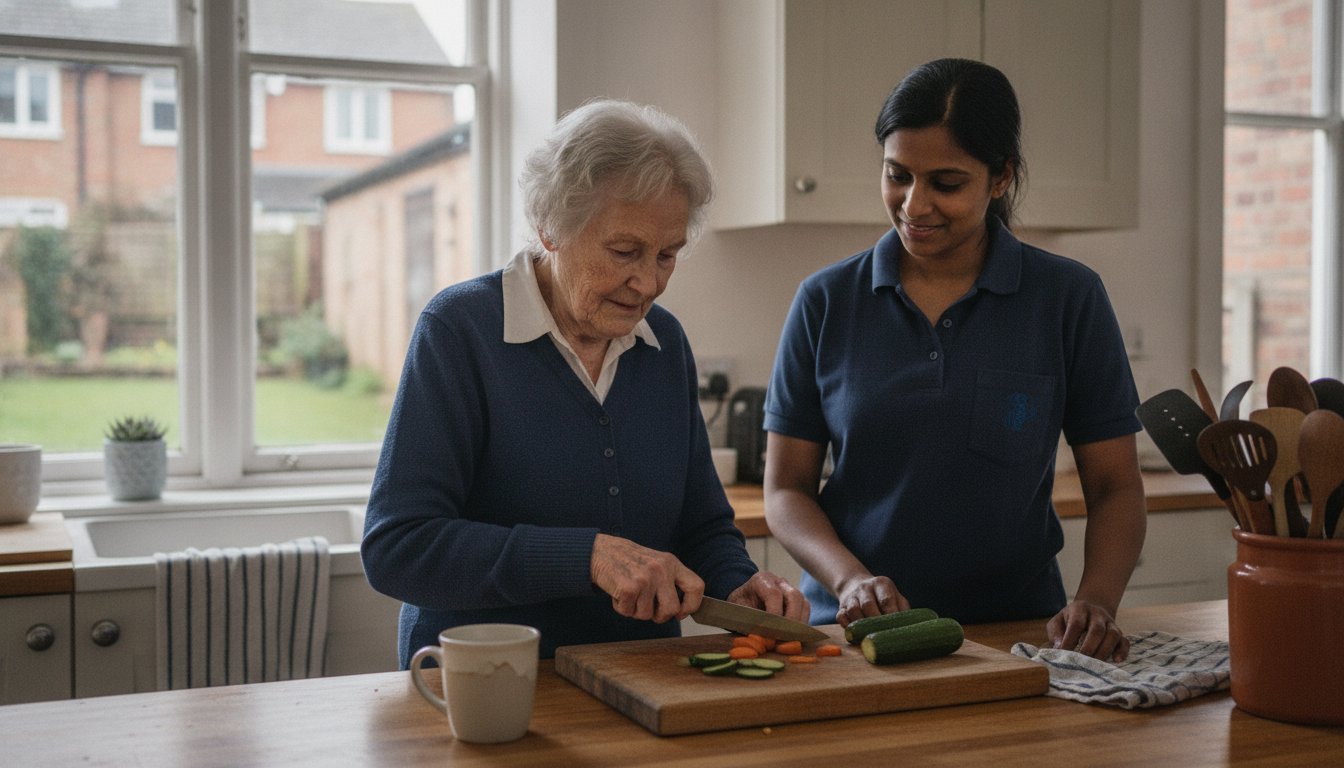
You open the fridge in your mother’s Highgate kitchen only to find a single, expired yoghurt and a half-empty jar of jam. It is a quiet, heart-sinking moment that many families face when they realise a loved one is no longer managing the daily demands of meal preparation and nutrition. You want them to stay independent in the home they love. Yet, the constant worry about skipped meals or a forgotten hob feels like a heavy, invisible weight on your shoulders every single day.
We understand that balancing your own career with the nutritional needs of a parent is exhausting. Professional support is more than just a convenience; it is a clinical and emotional foundation for safe, home-based independence. A safe kitchen. A full plate. A mind at ease. This guide will help you discover how expert care transforms elderly nutrition and safety, ensuring your loved one remains comfortably at home whilst receiving consistent, healthy meals. We will explore the practical steps to creating a risk-free environment and reducing caregiver stress, allowing you to focus on quality time together again.
Key Takeaways
Learn why professional meal preparation is a clinical necessity for preventing malnutrition and reducing the risk of sudden hospital admissions.
Focus on nutrient density and protein to combat sarcopenia, ensuring every meal supports muscle maintenance and daily energy levels.
Conduct a methodical kitchen safety audit to identify hidden hazards and organise the environment for maximum senior accessibility.
Evaluate the differences between delivery services and in-home assistance to find the most sustainable solution for your family.
Understand how person-centred care and local shopping knowledge preserve dignity whilst supporting physical well-being.
Table of Contents
Why Meal Preparation is the Foundation of Independent Living
To truly understand the role of nutrition in ageing, we must first look at what meal preparation is within a professional care setting. It's not merely the act of standing at a stove. It is a methodical cycle of nutritional planning, purposeful shopping, and safe, hygienic execution. For a senior living in Highgate, this process often shifts from a simple household chore into a fundamental pillar of clinical stability. When meal preparation is managed with expertise, it acts as a primary safeguard against physical frailty. When it falters, the risk of hospital admission through avoidable falls or sudden illness increases significantly.
Food is more than fuel; it's a repository of memory and comfort. A favourite Sunday roast or a specifically seasoned soup provides a vital sense of continuity and personal dignity. As health needs evolve, the transition from managing chores to receiving home help in Highgate should feel like a supportive partnership rather than a loss of control. It's about preserving the deep emotional joy of a familiar plate whilst removing the physical exhaustion and cognitive burden of the process. This shift ensures that the kitchen remains a place of nourishment rather than a source of stress.
The Risks of Unsupervised Kitchen Use
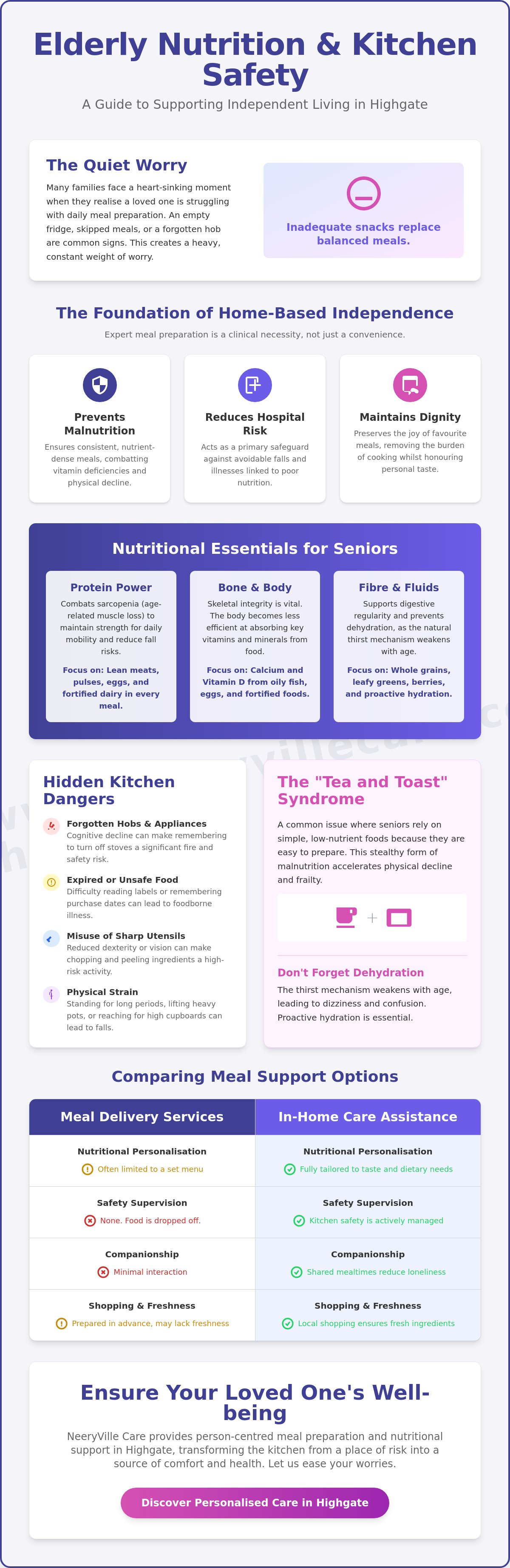
The kitchen is the heart of any home, yet it can quickly become a landscape of hidden anxiety for an older person. Forgotten hobs, expired ingredients, and the misuse of sharp utensils are frequent signals that a loved one is struggling. Cognitive decline can make the sequencing of complex recipes feel impossible. Physical limitations also lead to risks when reaching for high cupboards or standing for long periods. These domestic challenges frequently cause seniors to withdraw from cooking, leading to a dangerous reliance on inadequate snacks.
Combatting Senior Malnutrition and Dehydration
Malnutrition amongst the elderly in the UK remains a pressing health issue, often hidden behind closed doors. Many seniors succumb to "tea and toast" syndrome. This is where simple, low-nutrient foods replace the balanced meals required for muscle maintenance. It leads to vitamin deficiencies that accelerate physical decline. Dehydration is an equally stealthy threat. Because the natural thirst mechanism weakens as we age, many seniors don't realise they require fluids until they experience dizziness or confusion. Proactive hydration and structured meal preparation are essential clinical interventions that help maintain cognitive clarity and physical strength.
The role of clinical nutrition is vital at every stage of life; for those navigating the complexities of reproductive health and pregnancy, ah! fertility nutrition provides specialised nutritional therapy to support long-term well-being.
Nutritional Essentials for Seniors: More Than Just Calories
As we age, our appetite naturally wanes, making simple calorie counting less effective than focusing on nutrient density. Every mouthful must deliver maximum value. Nutritional needs for seniors change as the body becomes less efficient at absorbing vitamins and minerals. One of the most critical focuses in modern meal preparation is protein intake. Sarcopenia, the age-related loss of muscle mass, can lead to frailty and increased fall risks. Incorporating lean proteins, pulses, or fortified dairy into every meal helps maintain the strength needed for daily mobility.
Bone density remains a primary concern in 2026. Ensuring adequate Calcium and Vitamin D is no longer just a suggestion. It's a necessity for skeletal integrity. Whilst sunlight is a source, dietary fortification through oily fish and eggs is vital. Alongside this, a high-fibre diet supports digestive regularity, which often slows down in later years. Whole grains, leafy greens, and berries should be staples in the cupboard. If you find yourself worried about these dietary balances, speaking with a care specialist can help clarify the best approach for your loved one.
Texture-Modified Diets and Swallowing Difficulties
Dysphagia, or difficulty swallowing, is a common challenge that requires careful management. When soft or puréed foods become necessary, the goal is to maintain dignity and appetite. Meals shouldn't look like unidentifiable mush. Using moulds to reshape puréed vegetables or keeping flavours distinct ensures the dining experience remains pleasurable. For drinks, modern thickeners can be used whilst maintaining the original flavour of a favourite tea or juice. This ensures hydration doesn't feel like a chore.
Dementia-Friendly Dining Strategies
Living with dementia changes how a person perceives their plate. High colour contrast between the food and the dish, such as bright carrots on a blue plate, helps the brain recognise what is to be eaten. If using cutlery becomes frustrating, transitioning to "finger foods" like mini quiches or chicken goujons preserves independence. Taste buds also change. Many dementia patients develop a preference for stronger, sweeter, or more savoury flavours. Adapting recipes to these shifting palates ensures that meal preparation remains a source of comfort rather than confusion.
For families looking into advanced cognitive support, you can discover Neurobics, a specialised practice that uses neurofeedback therapy to help improve brain functions.
Comparing Meal Support Options: Which Path Suits Your Family?
Choosing the right path for a loved one's nutrition is a deeply personal decision. Many Highgate families begin with family-led meal preparation. It feels natural. It feels like a way to give back. However, the physical and emotional toll on adult children often leads to a state of constant exhaustion. You find yourself rushing from a busy workday to cook a meal, only to worry about the kitchen safety the moment you close the front door. This cycle is rarely sustainable for the long term and often strains the very relationships you are trying to protect.
Frozen meal delivery services and fresh ingredient boxes offer a practical alternative to the daily grind. They are convenient and time-saving. Yet, they lack the human touch that makes a meal truly restorative. Traditional "meals on wheels" services, whilst a staple of community support, often struggle with rigid delivery schedules and limited menu variety. They cannot account for the subtle shifts in a senior’s appetite or health that occur from one day to the next. A box on the doorstep cannot check if a person is actually hydrated or if they have the strength to open the packaging.
Delivery Services vs. In-Home Assistance
The fundamental difference between a delivery driver and a dedicated caregiver is the depth of presence. A delivery service drops a package at the threshold. A caregiver enters the home. They notice if your parent looks unusually tired or if they haven't touched their water since the morning. They adapt the meal preparation instantly based on how the senior feels in that moment. If a heavy meal feels overwhelming, they can switch to a light, nutrient-dense soup. Crucially, they provide the essential safety of supervision whilst the oven or hob is in use, preventing the domestic accidents that frequently lead to a loss of independence.
This level of dedicated assistance is a hallmark of high-quality providers worldwide; for instance, you can learn more about WithCare Support Services to see how professional disability support is structured to maintain independence.
Similarly, for those looking for elite standards of home safety and professional support in the United States, Elite Caregivers United LLC provides a professional CNA team dedicated to maintaining a secure and supportive environment for seniors.
The Cost-Benefit Analysis of Professional Support
When evaluating the financial aspect, it is vital to consider the hidden costs of an unmanaged kitchen. Expired food hidden in the back of the fridge and untouched grocery deliveries represent significant financial waste. Professional support is often seamlessly integrated into visiting care, making it a highly efficient and coordinated use of resources. It is not just about the plate of food. It is about the clinical security of knowing a professional is managing the domestic risks. For families living outside of North London, this provides a profound sense of peace. You aren't just buying a service. You are investing in a safe, social, and properly nourished life for your loved one.
Managing the costs of professional support often requires careful planning; for those exploring how to release equity or secure funding, I Need Cash provides expert guidance on homeowner loans to help maintain financial fluidity.
A Step-by-Step Guide to Organising Safer Kitchen Environments
A safe kitchen is the silent partner of successful meal preparation. It requires a methodical look at the physical environment through the lens of safety and accessibility. Start with a thorough kitchen audit. Check that every appliance cord is intact and that lighting is bright enough to eliminate shadows on work surfaces. In many Highgate homes, lighting can be atmospheric but insufficient for safe slicing and dicing. Ensuring that the hob and oven are clearly visible is a simple yet vital clinical safeguard.
Hydration stations are a proactive way to manage the weakened thirst mechanism mentioned earlier. Set up small areas in the kitchen and living room with a fresh glass and a jug of water. It serves as a gentle, visual prompt to drink throughout the day. If you are unsure how to begin this process, contact our team for a home safety discussion.
Practical Tools for Easier Cooking
Adaptive equipment can restore a sense of mastery to the kitchen. Kettle tippers allow for a safe pour without lifting heavy weights. Easy-grip peelers and perch stools reduce the physical toll of meal preparation on tired joints. For peace of mind, consider installing automatic shut-off devices for hobs and kettles. Clear, large-print labelling on cupboards and containers also helps reduce the cognitive load for those living with memory loss, making the space feel familiar and navigable.
Planning a Weekly Nutritious Menu
How NeeryVille Care Supports Nutritious Living in Highgate
At NeeryVille Care, we believe that nutrition is the cornerstone of dignity and home-based independence. When we provide live-in care, the process of meal preparation becomes a seamless, nourishing part of the daily rhythm. It isn't just about the cooking. It's about the entire journey from the initial shopping list to the final, satisfying bite. Our caregivers are trained to meet rigorous CQC-regulated standards for food hygiene and safety. This clinical oversight ensures that every meal is prepared in a way that minimises risk whilst maximising physical health, giving you absolute peace of mind that your loved one is in safe hands.
We also recognise that a well-managed home often involves the care of beloved pets; for professional pet care services that match our commitment to excellence, H&H Dog provides expert support for your canine companions.
For property owners who also manage holiday rentals and require elite maintenance standards, you can visit Neatly Homes Property Care LLC to learn how hotel-grade cleaning can be maintained in residential settings.
Beyond maintenance and cleaning, the physical design of the home plays a crucial role in long-term independence; Neil Norton Design offers professional consultation for residential interior projects to help families adapt their living spaces thoughtfully.
Ensuring your loved one is healthy and mobile allows them to remain part of special family occasions, whether it's a local gathering or a wedding at a beautiful destination like Laurel Haven Estate.
Bespoke Support for Highgate Residents
Our team is a familiar and reassuring presence across North London. We know the local shops in Highgate and understand how to source the best seasonal produce for our clients. This local knowledge allows us to maintain the high standards of fresh cooking that our families expect. If a specific health condition requires a more clinical approach, we coordinate directly with local GPs or nutritionists to ensure the dietary plan is medically sound. For those who require broader assistance beyond the kitchen, our home help services provide comprehensive support, including light housekeeping and laundry, to keep the entire home running smoothly.
The NeeryVille Difference: Compassion on a Plate
We often describe our service as "compassion on a plate." A meal eaten in isolation is merely fuel, but a meal shared is a social event. Our caregivers use mealtimes as an opportunity for deep companionship, encouraging even those with smaller appetites to eat well through gentle conversation and a warm presence. We honour personal history and cultural tastes, ensuring that meal preparation respects the flavours and traditions that have always been important to your family. If you are looking for temporary support during a difficult period, we invite you to read about respite care at home Highgate to see how we can help during a transition.
Restoring the Joy of the Dining Table
Supporting a loved one's independence starts with the simple, daily act of eating well. You've seen how a safe kitchen environment and nutrient-dense choices form the clinical bedrock of home-based care. By moving beyond the exhaustion of unmanaged routines, you create space for your family to thrive. Expert meal preparation is more than just a task; it is a promise of stability and health that allows your parent to remain in the Highgate home they cherish. It ensures that the kitchen remains a place of nourishment rather than a source of hidden anxiety.
Our locally based team in North London brings CQC-regulated standards and specialist dementia training directly to your doorstep. We take the weight of worry from your shoulders, replacing it with the certainty of professional, person-centred support. This partnership allows you to focus on being a family again, whilst we handle the practicalities of domestic safety and nutrition. You don't have to navigate these complex domestic changes alone. We are ready to help you create a sustainable plan for the future.
Discover how our compassionate Highgate caregivers can support your loved one’s nutrition today.
We are here to guide you through every step of this transition with calm, reliable expertise. Let's work together to ensure every meal is a source of strength, comfort, and enduring dignity.
Frequently Asked Questions
How does meal preparation help someone with dementia?
Professional meal preparation provides a predictable routine that reduces the anxiety often associated with memory loss. By handling the complex sequencing of cooking, we prevent the frustration and danger of kitchen accidents. We also use visual cues and sensory engagement to make dining a positive experience. This structured approach helps maintain a healthy weight and ensures your loved one receives the specific nutrients needed for cognitive stability in a calm environment.
Can a caregiver help with grocery shopping as well as cooking?
Yes, our caregivers provide a complete service that includes creating bespoke shopping lists, visiting local Highgate stores, and putting away the groceries. We handle the physical burden of carrying heavy bags and ensure only fresh, high-quality ingredients enter the home. This holistic approach ensures the fridge is always stocked with nutritious options, preventing the reliance on processed convenience foods that often occurs when seniors struggle to shop independently.
What happens if my loved one has very specific cultural or religious dietary needs?
We prioritise the personal dignity and heritage of every individual through person-centred care. Whether your loved one requires Halal, Kosher, vegetarian, or specific cultural recipes, we adapt our meal preparation to honour these traditions. Our caregivers take the time to learn favourite family recipes and specific seasoning preferences. This ensures that food remains a source of comfort and identity rather than just a clinical requirement, respecting the lifelong habits that define their well-being.
For families who value the role of heritage in nutrition, you can check out Best Indian Food in Hayward, CA | Favorite Indian Restaurant | Indian Food near me to see how authentic menus and buffet-style variety can celebrate cultural culinary traditions.
Is meal preparation included in standard domiciliary care visits?
Yes, assisting with meals is a fundamental component of our domiciliary care and visiting care services. During a standard visit, a caregiver can prepare a fresh meal, tidy the kitchen, and ensure your loved one is properly hydrated. Because we have a minimum visit duration of 60 minutes, there's ample time to focus on quality cooking and social interaction. This ensures that nutrition is never rushed and remains a dignified, enjoyable part of the day.
How do you ensure food safety and hygiene in a client’s home?
Our caregivers follow strict CQC-regulated protocols for food safety and domestic hygiene. This includes methodical handwashing, the correct storage of high-risk foods, and regular checks for expired items in the fridge. We also ensure all cooking surfaces and utensils are thoroughly sanitised before and after use. These professional standards prevent the risk of foodborne illnesses, which can be particularly dangerous for older adults with weakened immune systems or underlying health conditions.
Can meal preparation services help with weight gain for frail seniors?
Yes, we focus on high-protein and nutrient-dense meals to support healthy weight gain and muscle maintenance. For seniors experiencing frailty, we can fortify favourite dishes with healthy fats and proteins without significantly increasing the volume of food. This approach is particularly effective for those with smaller appetites who struggle to finish large portions. By making every mouthful count, we help restore the physical strength needed to maintain independence and daily mobility.
What if my parent refuses to eat the meals provided?
Refusal to eat is often linked to underlying issues like loneliness, dental pain, or a loss of taste. Our caregivers are trained to approach these moments with patience and empathy. We explore different textures, stronger flavours, or smaller, more frequent "grazing" plates to find what works best. By offering choice and involving your parent in the decision-making process, we reduce resistance and turn mealtimes back into a positive, social experience they look forward to.
How do I know if my parent needs help with meal preparation?
Common signs include noticeable weight loss, a fridge full of expired items, or a sudden reliance on tea and toast. You might also notice your parent becoming anxious about using the hob or leaving appliances on by mistake. These signals suggest the cognitive and physical demands of cooking are becoming overwhelming. Professional support can step in early to prevent malnutrition and ensure the kitchen remains a safe, functional heart of the home.


Comments